
9 Genius Tricks to Keep Apples from Browning Longer
Watching your freshly sliced apples turn an unappetizing brown color can ruin any snack or meal prep plan. This natural browning process happens faster than you’d expect. Nobody wants to bite into discolored fruit pieces. Fortunately, simple science-backed methods can keep your apple slices looking fresh and appetizing for hours.
Use Lemon Juice as Your First Defense
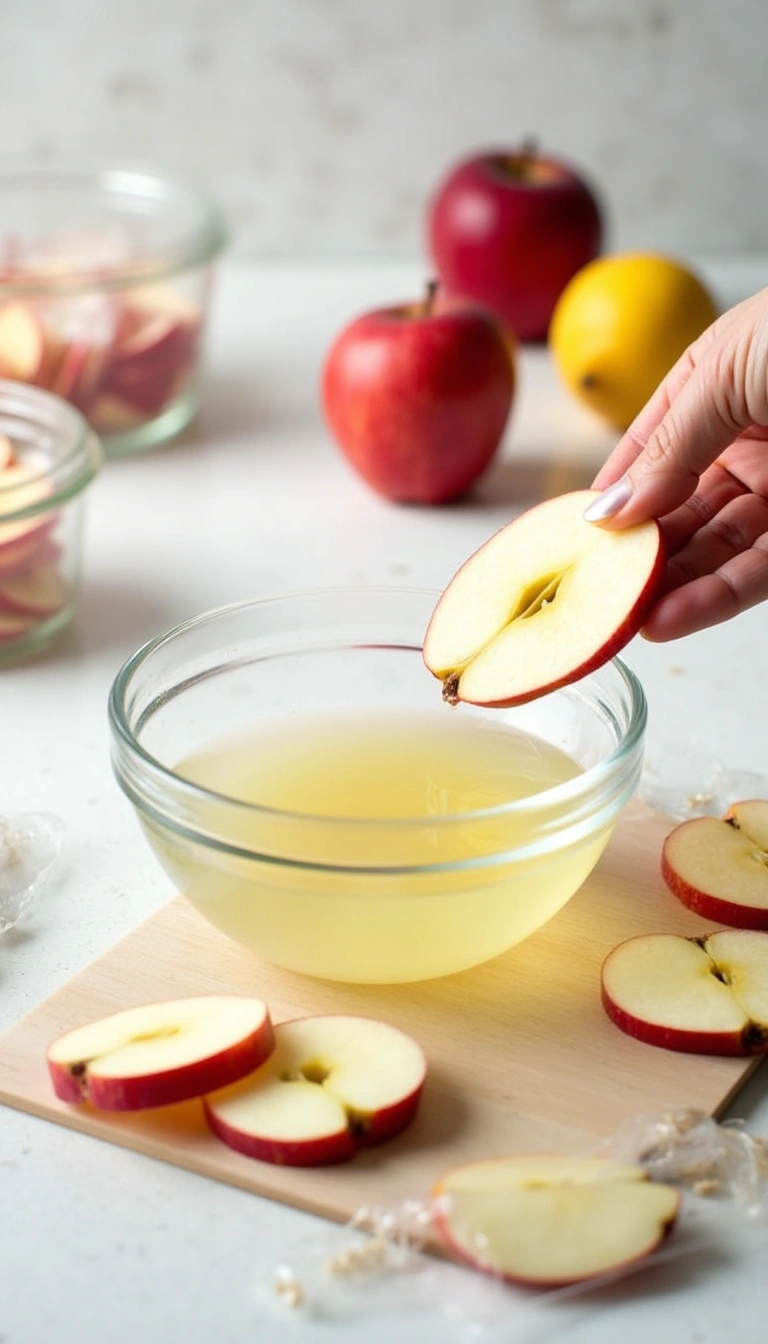
Citric acid acts as a powerful antioxidant that blocks the enzymatic browning process in cut apples. When you expose apple flesh to air, enzymes called polyphenol oxidase react with oxygen to create brown compounds. Lemon juice creates an acidic barrier that prevents this oxidation reaction. Fresh lemon juice contains about 5-6% citric acid, making it one of the most effective natural browning inhibitors. Simply brush or dip your apple slices in fresh lemon juice before storing them.
Quick Action Step: Squeeze half a lemon into a bowl and toss your apple wedges in the juice for 30 seconds before packing them away.
Try the Salt Water Solution Method
Salt water creates a protective brine that prevents oxygen from reaching the apple’s surface enzymes. This method works by changing the pH level around the fruit and creating an inhospitable environment for browning reactions. Many professional chefs use this technique in restaurant kitchens. A study from the Institute of Food Technologists found that salt water solutions kept apple slices fresh-looking for up to 8 hours. The salt concentration doesn’t need to be high to be effective.
Quick Action Step: Mix 1/2 teaspoon of table salt into 1 cup of cold water, dip your apple pieces for 30 seconds, then drain and store.
Apply Honey Water for Natural Sweetness
Honey contains natural compounds that slow down enzymatic browning while adding a subtle sweet flavor to your fruit. The peptides and amino acids in honey work as natural antioxidants. This method appeals to people who want to avoid the tart taste that lemon juice can add. Raw honey works better than processed honey because it retains more of its natural enzyme-blocking properties. You’ll get anti-browning protection plus a hint of natural sweetness.
Quick Action Step: Stir 2 tablespoons of honey into 1 cup of water until dissolved, then dip your sliced apples and pat them dry.
Embrace the Power of Pineapple Juice
Pineapple juice contains both citric acid and ascorbic acid (vitamin C), making it a double-threat against apple browning. The natural fruit enzymes in pineapple juice also help preserve the cellular structure of cut apples. This tropical solution adds a pleasant flavor complement to apple slices. Canned pineapple juice works just as well as fresh-squeezed for this purpose. The vitamin C content remains stable in properly stored juice products.
Quick Action Step: Pour pineapple juice into a shallow dish, quickly dip each apple slice, and shake off excess liquid before storing.
Store Slices in Airtight Containers Immediately
Limiting oxygen exposure is the most fundamental way to prevent browning since oxidation requires air contact. Vacuum-sealed bags or airtight containers create an oxygen-poor environment that dramatically slows down discoloration. Professional food storage experts recommend this as the baseline method. Removing air from storage containers can extend apple freshness by 3-4 times compared to leaving them exposed. Glass containers with tight-fitting lids work better than plastic bags with loose seals.
Quick Action Step: Place apple pieces in a container, press out as much air as possible, and seal tightly before refrigerating.
Wrap Individual Pieces in Plastic Wrap
Creating individual barriers around each apple slice prevents air circulation and moisture loss. This method works particularly well for packed lunches or when you need grab-and-go portions. The plastic creates a micro-environment that preserves both color and texture. Food scientists note that this technique maintains apple crispness better than bulk storage methods. Each wrapped piece stays isolated from air exposure and cross-contamination.
Quick Action Step: Tear off small pieces of plastic wrap and individually wrap each apple slice, pressing out air bubbles as you seal.
Use Ascorbic Acid Tablets for Maximum Protection
Vitamin C tablets dissolved in water create the strongest anti-browning solution available for home use. Ascorbic acid directly neutralizes the enzymes responsible for oxidation reactions. This pharmaceutical-grade approach gives you precise control over the concentration. One 500mg vitamin C tablet dissolved in a cup of water creates a more potent solution than most natural fruit juices. Food preservation specialists use this method when maximum freshness duration is required.
Quick Action Step: Crush one vitamin C tablet into powder, dissolve it in 1 cup of water, and soak apple slices for 1 minute before draining.
Keep Cut Apples Refrigerated at All Times
Cold temperatures significantly slow down enzymatic reactions that cause browning. Refrigeration at 35-40°F reduces enzyme activity by up to 75% compared to room temperature storage. Professional food handlers always prioritize temperature control for cut produce. The enzymatic browning process happens 2-3 times faster at room temperature than in proper refrigeration. Even short periods at warm temperatures can accelerate discoloration dramatically.
Quick Action Step: Cut apples right before eating, or immediately transfer prepared slices to your refrigerator’s main compartment, not the door where temperatures fluctuate.
Combine Multiple Methods for Ultimate Results
Using two or three preservation techniques together creates synergistic effects that outperform any single method. For example, combining lemon juice treatment with airtight storage and refrigeration can keep apple slices looking fresh for 24-48 hours. Food science research supports layered preservation approaches. Restaurant prep cooks routinely combine acid treatment, proper storage, and temperature control to maintain fruit quality during busy service periods. This professional approach works equally well in home kitchens.
Quick Action Step: Dip apple slices in your chosen acid solution, pat them dry, store in airtight containers, and refrigerate immediately for maximum freshness duration. These proven techniques will transform your fruit storage game and eliminate waste from premature browning. Choose the methods that fit your taste preferences and kitchen routine. Your future self will thank you for learning these simple yet effective preservation strategies.

Welcome to MithilaConnect, where we curate the art of living, celebrating the vibrant tapestry of life through culture, fashion, food, and everything in between.